
Kids Mental Health Week: How to Create a Meaningful, School-Wide Impact 🧠💛

Every May, schools across Canada recognize Kids Mental Health Week—a time to pause, reflect, and intentionally support the emotional well-being of students.
But here’s the truth:
A bulletin board and a themed assembly? Not enough.
If we want real impact, mental health week needs to be felt in classrooms, hallways, and playgrounds. It should give kids tools they actually use—when they’re overwhelmed, frustrated, or just need a moment to reset.
At Little Yogis Academy, we’ve worked with thousands of schools to bring mindfulness, movement, and social-emotional learning (SEL) into everyday routines. Here’s how you can create a Kids Mental Health Week that’s not just memorable—but meaningful.
Why Kids Mental Health Week Matters
Children today are navigating big emotions in a fast-paced, overstimulating world. Many are still learning how to:
- manage anxiety and stress
- regulate their emotions
- build confidence and resilience
- connect with others in a healthy way
Kids Mental Health Week gives schools a powerful opportunity to normalize these conversations and equip students with lifelong tools.
Think of it as planting seeds 🌱
Not everything blooms instantly—but the roots matter.
How to Plan an Impactful Mental Health Week at School
1. Choose a Clear Theme for the Week
A strong theme helps tie everything together and makes the week feel intentional.
Some ideas:
- “Mindful Minds, Strong Hearts”
- “Feel It, Name It, Move Through It”
- “Calm Bodies, Kind Communities”
Use your theme in morning announcements, classroom discussions, and visuals around the school.
2. Start Each Day with a 5-Minute Mindfulness Routine

6
Consistency is where the magic happens.
Simple daily practices:
- Balloon Breathing (inhale big, exhale slow 🎈)
- 5-4-3-2-1 Grounding Exercise
- Body Scan Check-In (“How does your body feel today?”)
- Gratitude Moment
These small rituals help children learn to pause and tune in—skills they’ll use far beyond the classroom.
3. Bring Movement Into Mental Health
Mental health isn’t just about talking—it’s about moving, too.
Incorporate:
- Kids yoga sessions (animal poses, storytelling yoga)
- Brain breaks with stretching or dance
- Outdoor nature walks or “mindful recess”
Movement helps release stress, improve focus, and regulate emotions—especially for younger children.
4. Create Safe Spaces for Big Feelings
Not every child will want to talk in a group setting—and that’s okay.
Set up a Calm Corner or Mindfulness Space in classrooms with:
- soft seating or mats
- breathing visuals
- emotion cards
- sensory tools (stress balls, fidgets)
Give students permission to use this space when they need to reset.
5. Teach Emotional Literacy (In a Fun Way!)
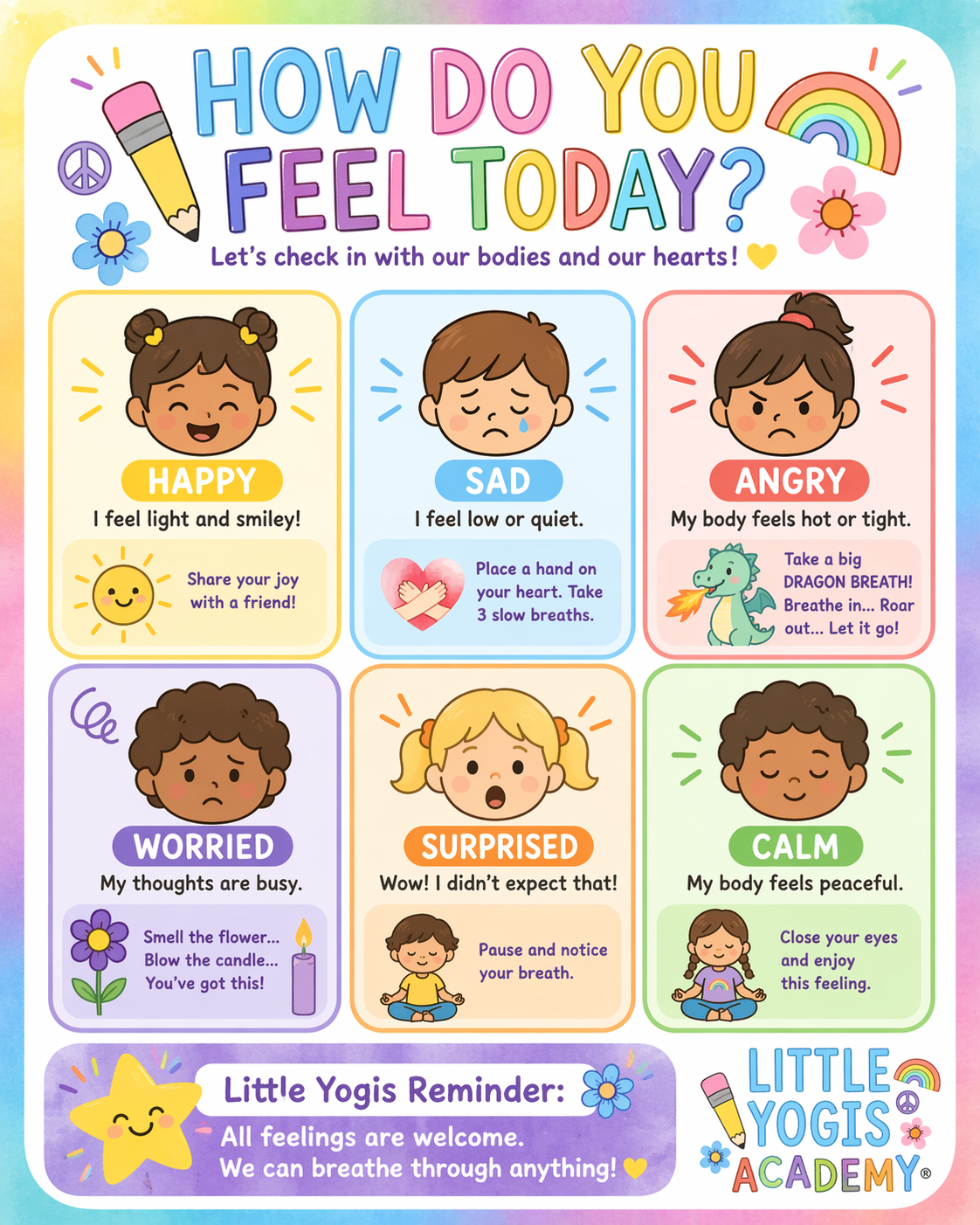
Kids can’t manage emotions they don’t understand.
Try:
- Feelings charades (act it out!)
- Emotion check-ins (morning or after recess)
- Storytime with SEL themes
- Drawing or journaling prompts (“What does calm look like for you?”)
Keep it playful and age-appropriate—this is where real learning sticks.
6. Involve Families and the School Community
Mental health doesn’t stop at the classroom door.
Ways to extend impact:
- Send home simple breathing exercises
- Share a “Mindfulness at Home” guide
- Host a family yoga or wellness night
- Invite local wellness partners (like yoga or mindfulness educators 👀)
When families are involved, kids feel supported on every side.
7. End the Week with Reflection + Celebration
Wrap up with intention:
- Ask students what they learned
- Share highlights in an assembly
- Celebrate participation (certificates, shoutouts, badges!)
Most importantly—remind students that these tools are always available to them.
Make It Easy: Bring in Experts

If your team is feeling stretched (because… when aren’t they?), partnering with experts can take your Mental Health Week to the next level.
At Little Yogis Academy, we offer:
- school-wide yoga and mindfulness workshops
- Kids Mental Health Week programming
- teacher-friendly resources and lesson plans
- engaging sessions that kids actually love
We come to you—and we make it fun, impactful, and stress-free.
Final Thought 💛
Kids don’t need perfection.
They need tools. They need space. They need safe adults who show them how to slow down and tune in.
Kids Mental Health Week is your chance to give them exactly that.
And who knows…
One simple breathing exercise might be the thing they carry with them for life.
Ready to Bring Mental Health Week to Life?
Contact us to learn how we can support your school with kids yoga, mindfulness programs, and mental health workshops across Canada.
Because when we support kids from the inside out…
everything else starts to grow 🌱✨


.webp)


